
The Talon
Vol. 1 | Ed. 14
Watchdog: The Simple Recipe for Totalitarianism
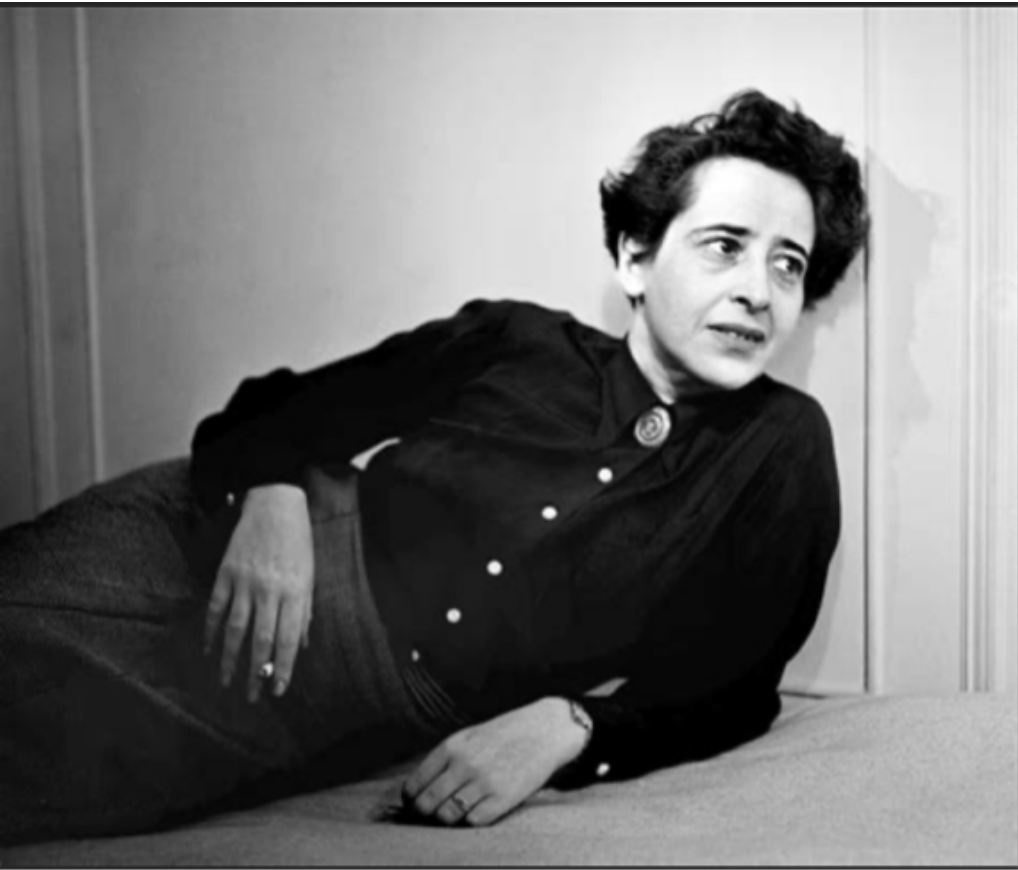
This past month, I completed an English project which consisted of in-depth research regarding specific existentialist figures in history, and I selected Hannah Arendt, a German Jewish political existentialist, prevalent for her work surrounding World War II. Her values and guiding outlook were all about determining the human reasoning behind politics, and analyzing the relationship between the two. However, the most interesting part to me about her different ideals and critiques of politics was her specific recipe for totalitarianism: as Hannah Arendt had lived through the demoralizing landscape of German politics as a Jewish German in the early 1940s, she was able to create a list of specific components that create a totalitarian government.
In her book The Origins of Totalitarianism, Arendt broke the book into three sections, detailing the prerequisites for totalitarianism and defining totalitarian regimes. She began by dissecting antisemitism as a whole, describing how the Jewish population achieving visibility in both social and economic spheres led the government to scapegoat the Jews, creating a common enemy for the German population. But, as the German government used scapegoating as a force of ruling and governance, it increased fear and destroyed trust between individuals outside of the Jewish faith, as they saw what would happen to their families and lives if they did not devote themselves to the ideals of their government. They were afraid to be labeled as “other” or “traitor” by the government, and turned to blind devotion in order to escape that fear.
Arendt also discussed the impacts of imperialism on European society as a whole: as more territories were being seized, their people mistreated and unrepresented by the new government, the idea of labeling a person as “other” bled from the imperialized territories into Germany, as evidenced by the development of antisemitism into a political strategy. She believed that the application of degradation based on race or religion overseas spread, weaving and imbedding itself into German political spheres.
In the final section of The Origins of Totalitarianism, Arendt describes totalitarianism as being created by loneliness as well as inflicting loneliness upon individuals in a totalitarian regime. As individuals begin to feel isolated, they may join a mass society led by a charismatic leader, in order to feel a sense of belonging. She saw those individuals in German society in the 1940s sought out a sense of belonging as they felt conflicted with system changes: as politics altered, as social spheres adapted into entirely new realms, individuals sought comfort in groups in which they felt they belonged, which created blind devotion to a singular leader.
This project taught me more than the simple biographical sketched outline of Hannah Arendt's life: I think it is incredibly important for everyone to be able to be introspective about their government, and about societal structures. Social media itself has grown into an ever-evolving platform that could potentially be labeled as totalitarianism. Social media creates an echo chamber simply based on algorithms, decreasing interaction between people of different perspectives. Social media destroys trust between individuals, as no moment is private in this era, and everything is available to the entire world. Our entire societal structure has bent to absorb social media, accepting Instagram and Snapchat and other social media platforms as methods of communication, between friends or the world, creating a borderline totalitarian regime within the tech itself. To combat totalitarianism, Hannah Arendt emphasized the importance of conversation, group action, and individual thought. She believed that totalitarian regimes promoted conformity, which silenced an individual's ability to think for themselves, as they are continuously surrounded by fear created by the totalitarian regime. Arendt hated echo chambers beyond all else, and in fact kept in close contact with a Nazi throughout her lifetime. This is a direct example of her beliefs, that it is important to simply have conversations with people of differing perspectives, as that alone is able to combat totalitarianism. It’s really interesting to me to be able to apply this recipe to our current day societal and political structures, and see where the similarities lie.